Your Website Doesn't Have a Traffic Problem. It Has a Relevance Problem.
When a digital experience underperforms, one of the first questions organizations ask is:
“How do we get more people here?” More SEO? More campaigns? More social traffic? More internal links? More promotion? Sometimes that's exactly the problem.
But sometimes millions of people are already arriving. They're just not finding enough reason to continue. That's not a traffic problem.It's a relevance problem.
Traffic tells us someone arrived
Traffic is appealing because it's easy to understand.
Sessions went up. Visitors increased. Pageviews grew. The campaign generated 30% more traffic. Those numbers make clean charts. But traffic measures arrival, not value. Imagine 100,000 people enter a store and 95,000 leave without finding what they need. Would your first recommendation be to bring another 100,000 people through the door Probably not.
You'd want to understand what happened after they arrived. Digital experiences deserve the same scrutiny.
The enterprise website problem
This problem becomes particularly visible on large corporate websites.
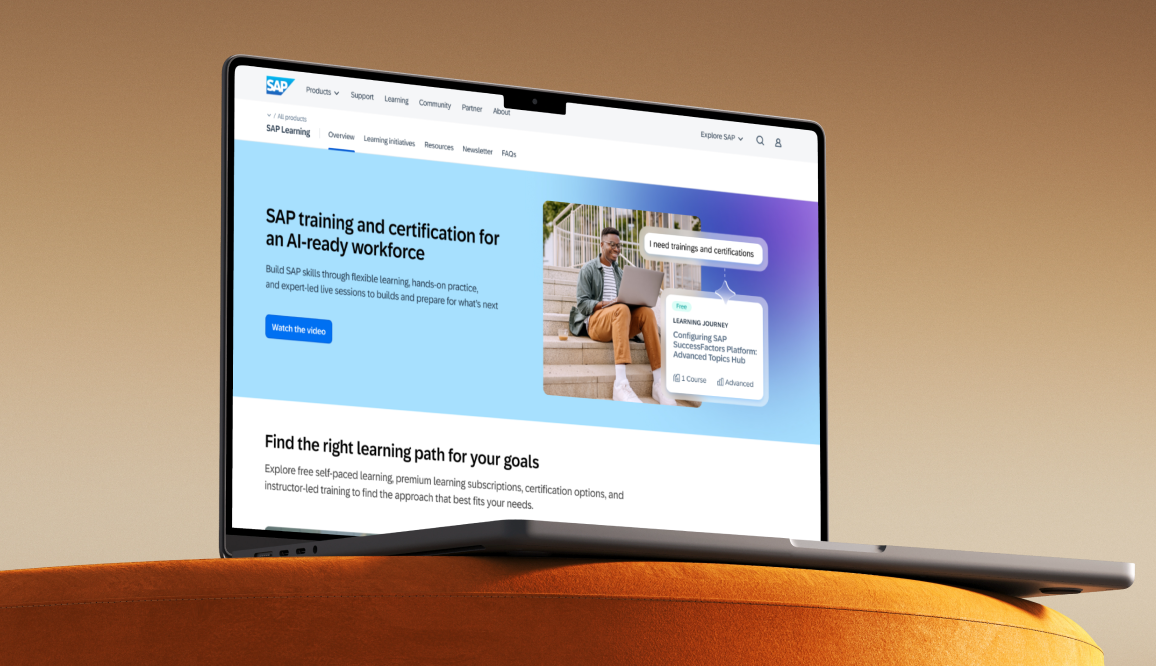
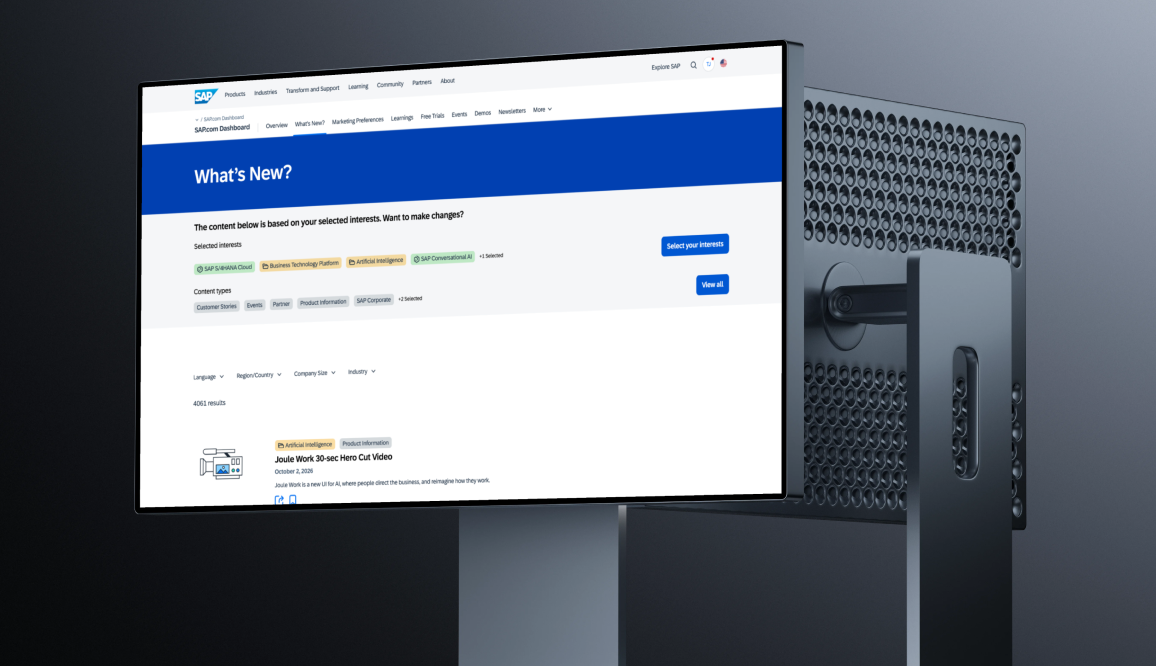
Over time, websites accumulate content from dozens of internal organizations. Marketing wants campaign content. Product teams want product information. Corporate communications wants thought leadership. Learning teams want educational content. Customer teams want stories. Events teams want events. Analyst relations wants reports. Every piece of content may be individually legitimate. Collectively, the experience becomes difficult to navigate. The website starts reflecting the organization behind it rather than the person using it. That's when relevance deteriorates.
Users don't care about our information architecture
Organizations naturally structure information around themselves.
Customers rarely arrive thinking: “I need to navigate the company's organizational taxonomy.” They arrive with intent.
“I need to reduce our finance close time.”
“I need to understand whether this integrates with our existing environment.”
“I need proof that companies like mine have successfully implemented this.”
“I need to learn this software.”
“I need to know what this costs.”
“I need to convince my leadership team this investment makes sense.”
The difference is subtle but important. Organizations organize around information.
Customers navigate around questions. Relevance is what connects the two.
More content can actually make the problem worse
When engagement is low, teams frequently respond by adding content.
The more content you include, the more the user is eventually confronted with fifteen perfectly legitimate things they could do next. And no clear indication of which one matters. The problem isn't lack of content. It's lack of prioritization. A useful experience isn't one that exposes everything. It's understands what matters now.
Relevance reduces distance
I think of relevance as the distance between a user's intent and the information that helps them act on it.
When that distance is short, experiences feel intuitive. When it's long, experiences feel complicated. A visitor interested in product pricing shouldn't need to understand the company's navigation architecture to find pricing.
Someone evaluating credibility shouldn't have to browse a generic resource library hoping to discover customer evidence. Someone trying to learn shouldn't need to understand the difference between several internally distinct learning platforms before finding the right starting point. Every unnecessary decision increases the distance.
Good UX reduces it.
AI raises the stakes
AI may dramatically accelerate this shift.
Search engines already increasingly answer questions without requiring users to visit the underlying website. AI agents will go further. They'll research products. Compare vendors. Summarize documentation. Read customer reviews. Evaluate capabilities.
Potentially shortlist solutions before the customer ever reaches a corporate website. That means organizations may eventually receive less exploratory traffic—but more intentional traffic. Someone arriving after an AI-assisted research process may already know the basics. They don't need another generic product overview. They need deeper evidence.
The website has to recognize that the visitor's information journey may have started somewhere else.
Relevance may become more important than personalization
Personalization has been discussed in digital design for years.
But personalization and relevance aren't necessarily the same thing. Knowing someone's industry doesn't automatically make an experience useful. Knowing their company size doesn't guarantee the right recommendation. Even knowing their job title may tell us surprisingly little about what they're trying to accomplish at that moment.
Intent can be more valuable. A CFO researching AI implementation and a developer researching AI implementation might require completely different experiences.
But two people with different job titles trying to understand implementation cost might temporarily share the same intent.
Designing for fewer, better decisions
There is an uncomfortable implication here.
That can be difficult inside organizations because every piece of content usually has an owner. Removing something from the experience can feel like reducing that team's visibility. But user experience isn't an exercise in distributing organizational visibility equally. It's about helping people move forward. Sometimes the strongest design decision is deciding what the user doesn't need to see yet.
The real opportunity
Traffic still matters.
Without discovery, even the best experience has limited impact. But acquisition cannot compensate indefinitely for weak relevance. If people consistently arrive and fail to progress, sending more people into the same experience simply scales the problem. Focusing on narrowing intended discovery will further impact positive agent-to-human interactions.